Insulating and thermally
conductive gap filler


High Purity Aluminum Nitride Filler
High Thermal conductivity
It has a coefficient of thermal expansion similar to that of silicon semiconductors
Particle size distribution Controls
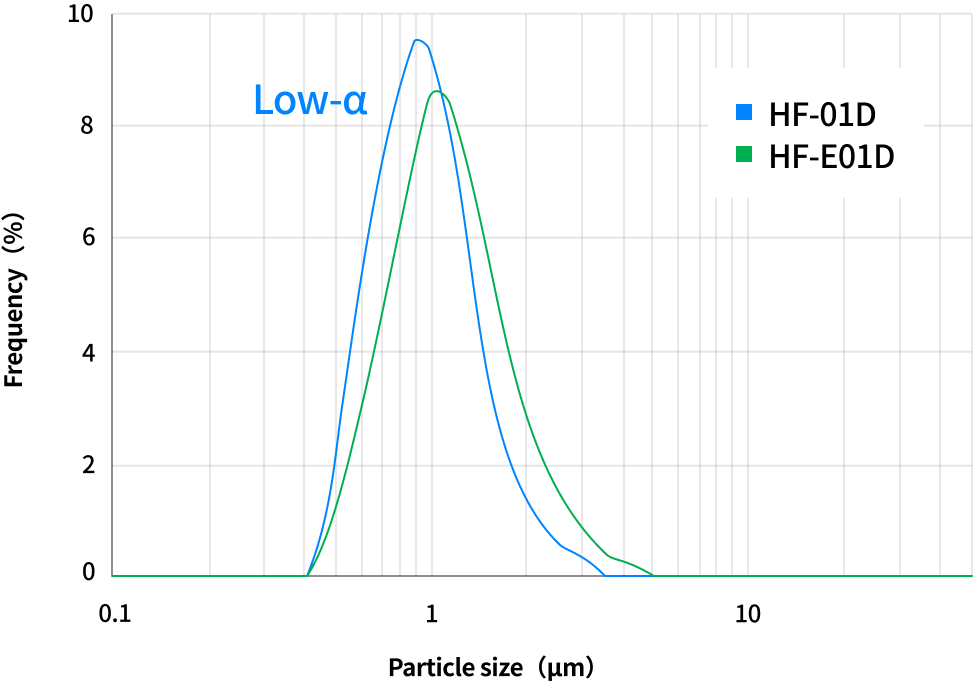
The average diameter of the powder agglomeration particles is about 1 micron and the particle size distribution is sharp
Diverse surface treatments
Superior surface treatments are possible, such as improved water resistance and improved blendability.
Our filler

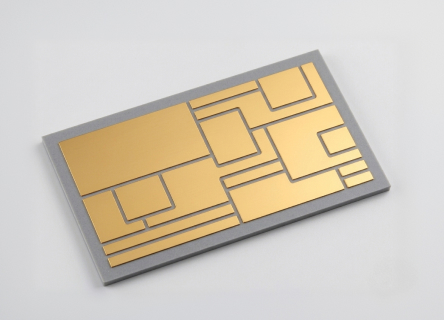

AlN filler can be utilized when conventional insulating thermal conductive fillers provide insufficient thermal conductivity.
Feature
feature01
Aluminum nitride is an inorganic material that combines high thermal conductivity with excellent electrical insulation. It possesses a thermal expansion coefficient comparable to silicon semiconductors and exhibits resistance to halogen gas plasma used in semiconductor manufacturing processes. Leveraging these properties, it is used in insulating heat-dissipating substrates for power semiconductors and high-power LEDs, as well as components for semiconductor manufacturing equipment used in the front-end process of silicon wafers. With approximately nine times the thermal conductivity of conventional thermal conductive fillers, it is anticipated as a high-thermal-conductivity filler to enhance the thermal conductivity of resins.
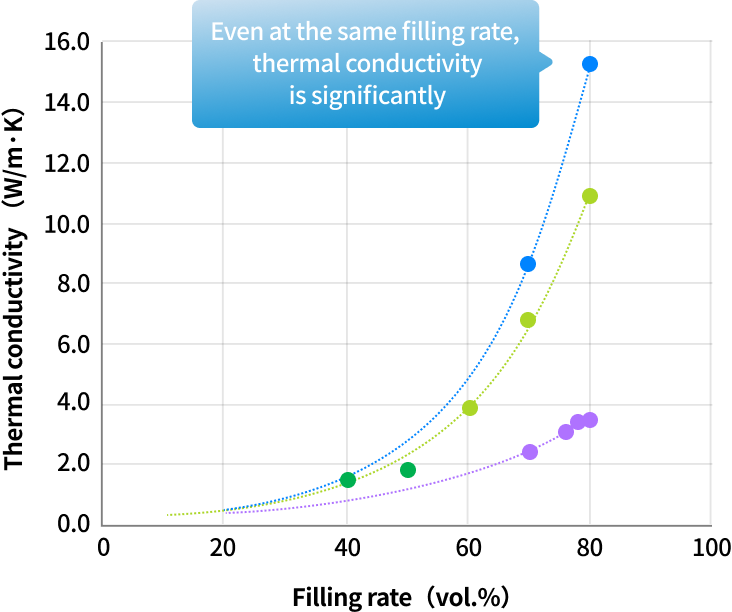
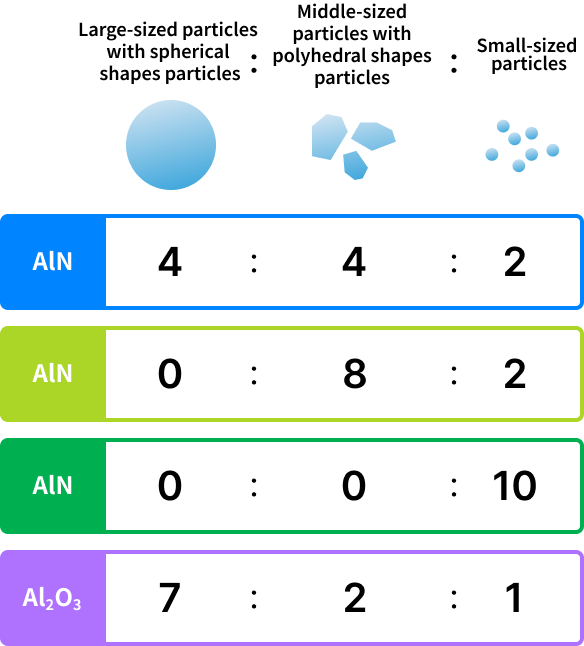
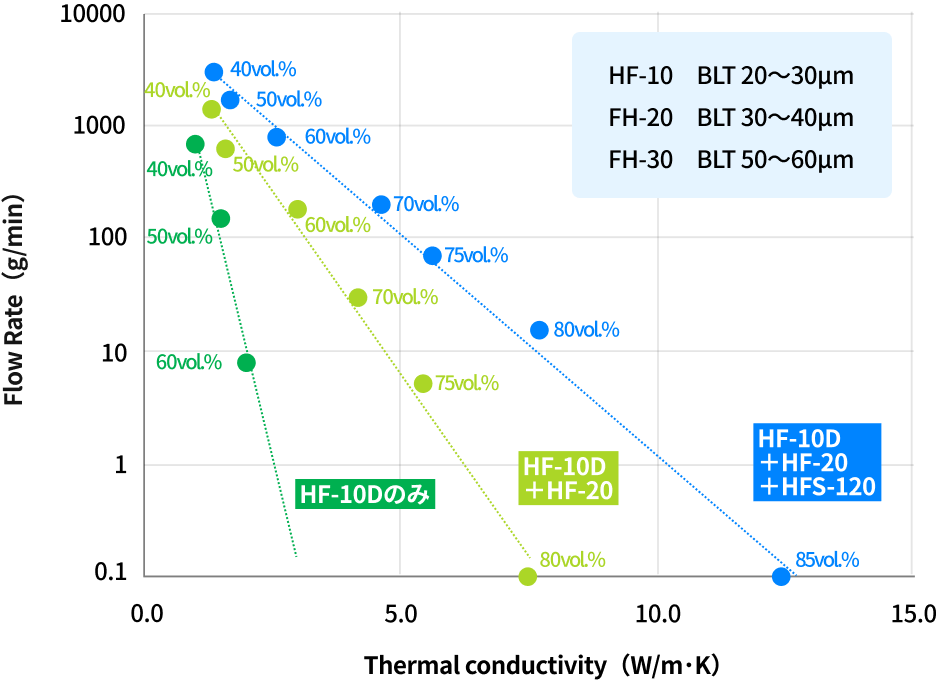
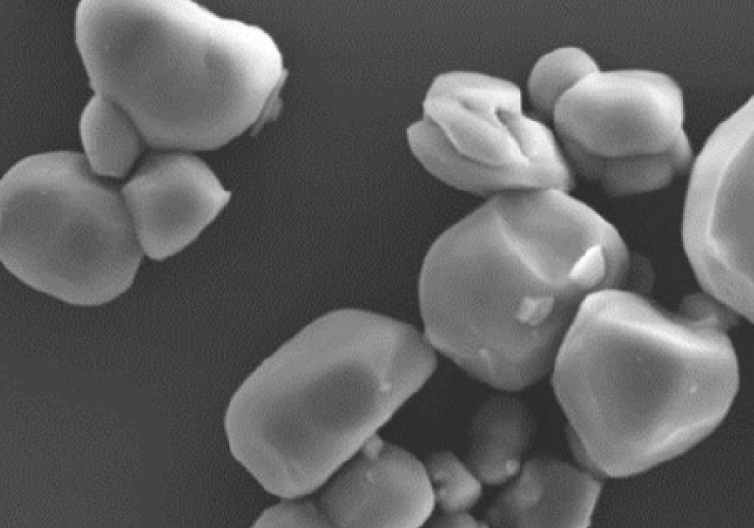
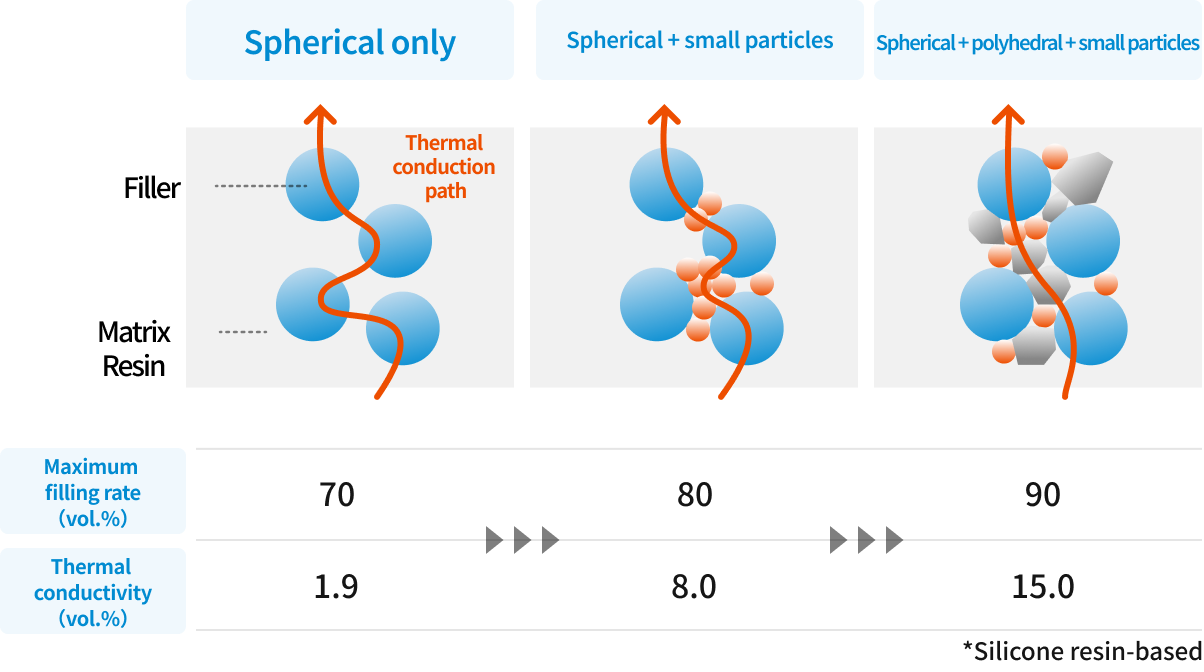
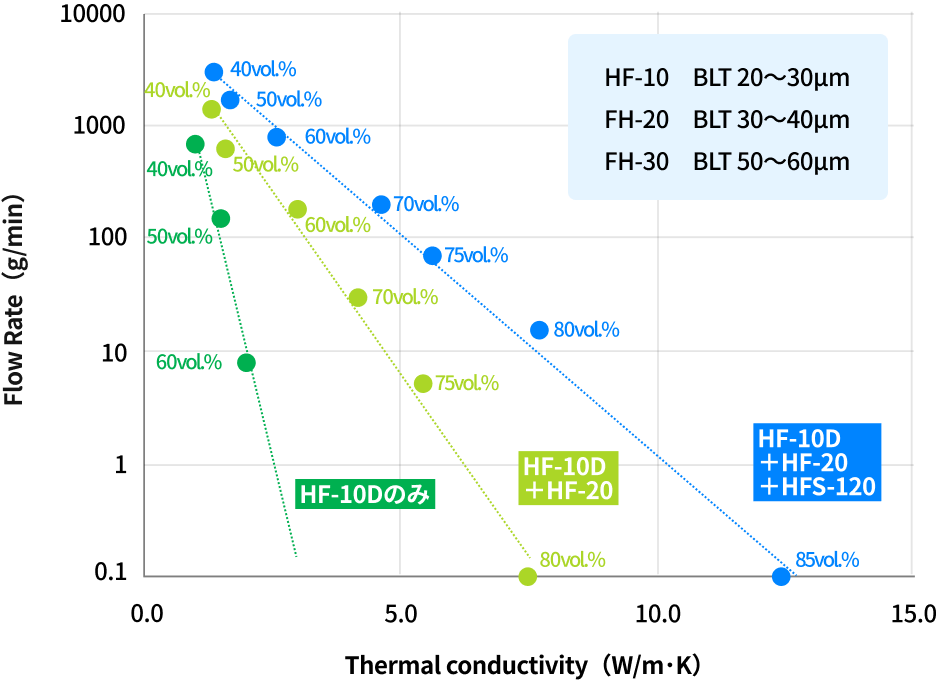
Heat, like electricity, travels along the path of least resistance. Therefore, connecting thermal conduction paths is crucial for achieving high thermal conductivity. Using only one type of spherical particle makes it difficult to increase the packing density and establish contact between particles, making it hard to achieve high thermal conductivity. Here, adding small spherical particles fills the gaps between particles, increases the packing density, and creates contact points between fillers, thereby enhancing thermal conductivity. Furthermore, using polyhedral particles increases the contact points between fillers, enabling the achievement of even higher thermal conductivity.

feature02
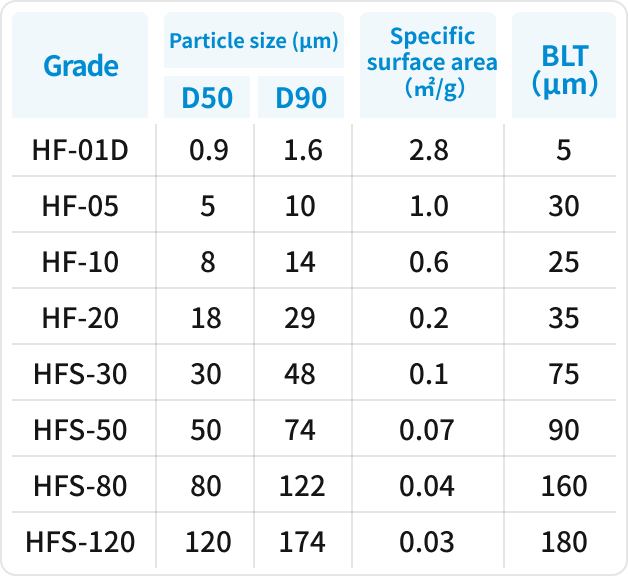
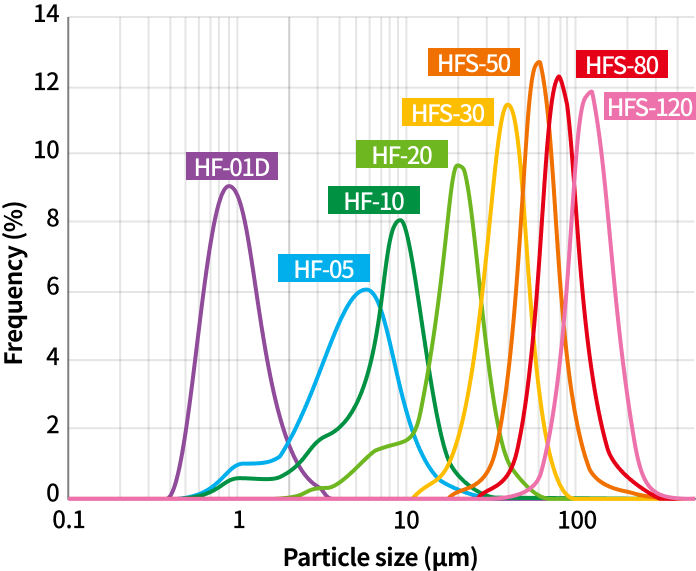
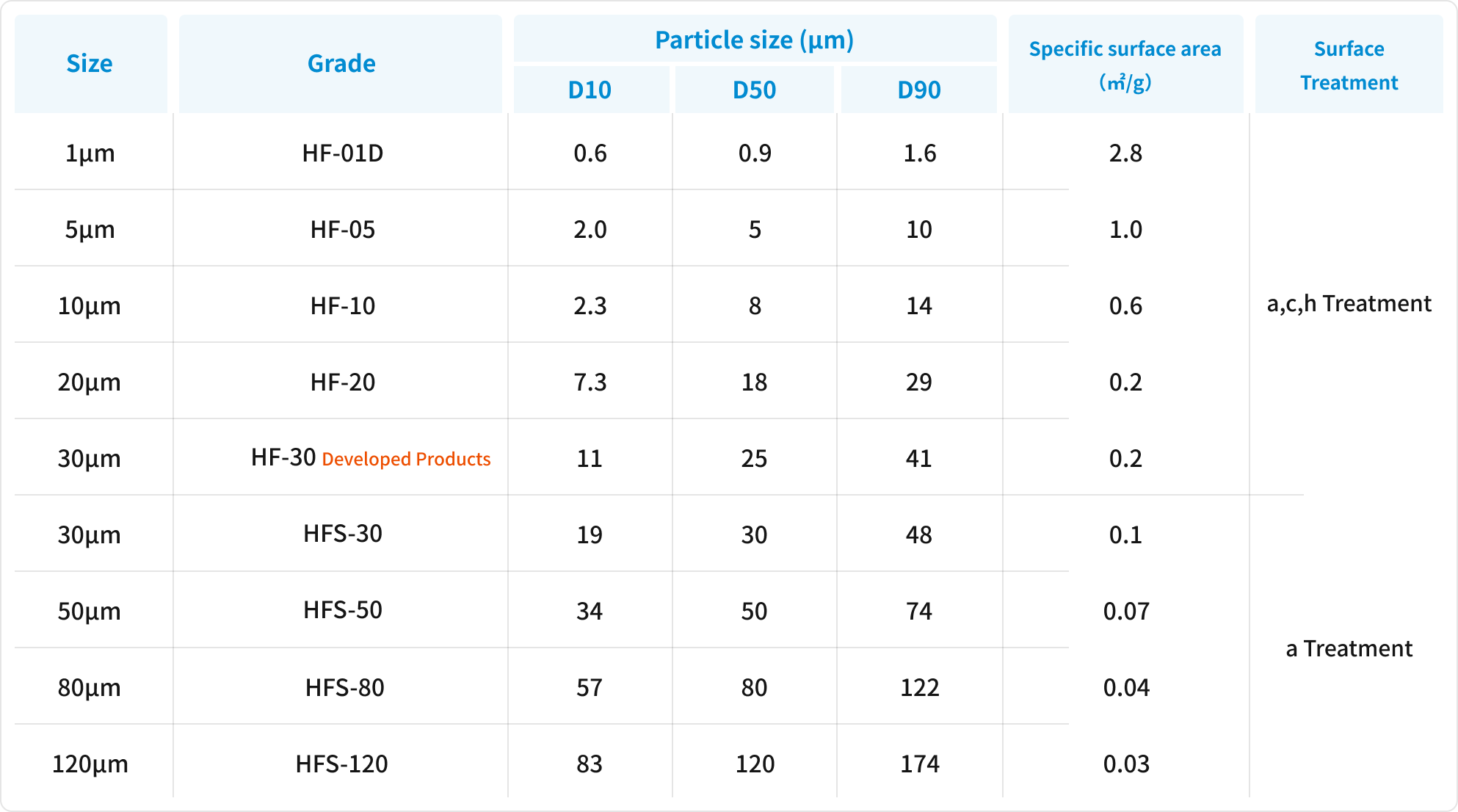
We offer fillers in a diverse range of sizes from 1μm to 120μm with controlled particle size distribution. By combining these sizes, you can achieve resin materials with enhanced fillability and high thermal conductivity.
* Figures and images are examples based on our testing and do not guarantee quality.
feature03
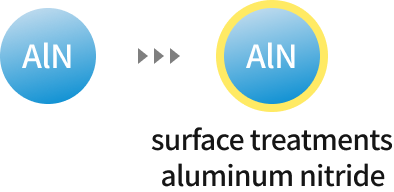
A variety of surface treatments are available to improve the water resistance—a weakness of aluminum nitride—and enhance its compatibility with various resins.


Case
ADAS applications
AlN Filler
Smartphone applications
AlN Filler
Data Center Applications
AlN Filler
Lineup
To enhance resin fillability, we offer fillers with a wide range of particle sizes from 1μm to 120μm. Combining these particle sizes enables the creation of resin materials with high thermal conductivity and excellent fillability.
Furthermore, by controlling the particle size distribution for each filler size, we improve dispersibility and ensure excellent processing characteristics.

Swipe left or right
to view
FAQ
When using fillers with multiple particle sizes in the kneading of resins and fillers, it is generally said that the mixability is improved by sequentially kneading the fillers with smaller particle sizes. Proper surface treatment can improve compatibility with resins and improve viscosity properties. In addition, by improving the familiarity with the resin by surface treatment, the kneading performance is better than that of untreated. As a result, high filling rates can be achieved and thermal conductivity can be improved.

Swipe left or right
to view
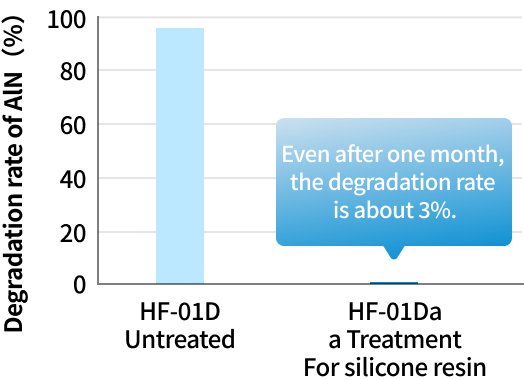
Comparing HF-01D (untreated) and HF-01Da (surface treated), the surface treatment product has inhibited hydrolysis.
AlN moisture resistance
Swipe left or right to view
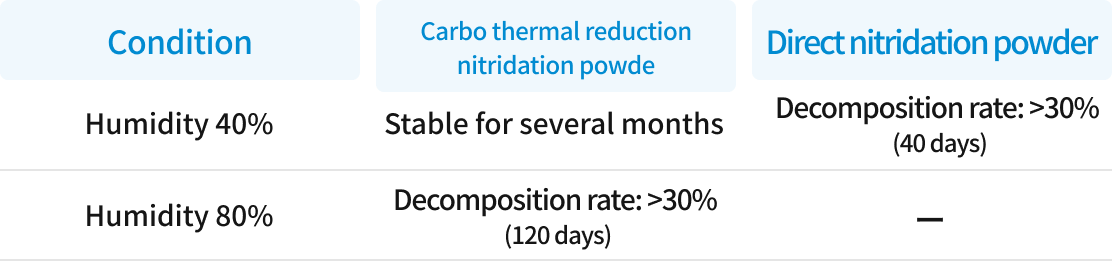
Citations: Kuramoto, Ceramics, 1987, 22, 29-4.
Surface treatment suppresses the hydrolysis of aluminum nitride
Swipe left or right
to view
Store in a dry, well-ventilated cold place. In addition, when storing for a long time, it is desirable to replace the container with dry nitrogen gas to prevent decomposition by moisture in the air. (*Excerpted from SDS)
It is considered to have an appropriate formulation. Please refer to the diagram below.
Swipe left or right
to view
Low alpha-ray development grade (HF-E01D) is also available.
Swipe left and right to view

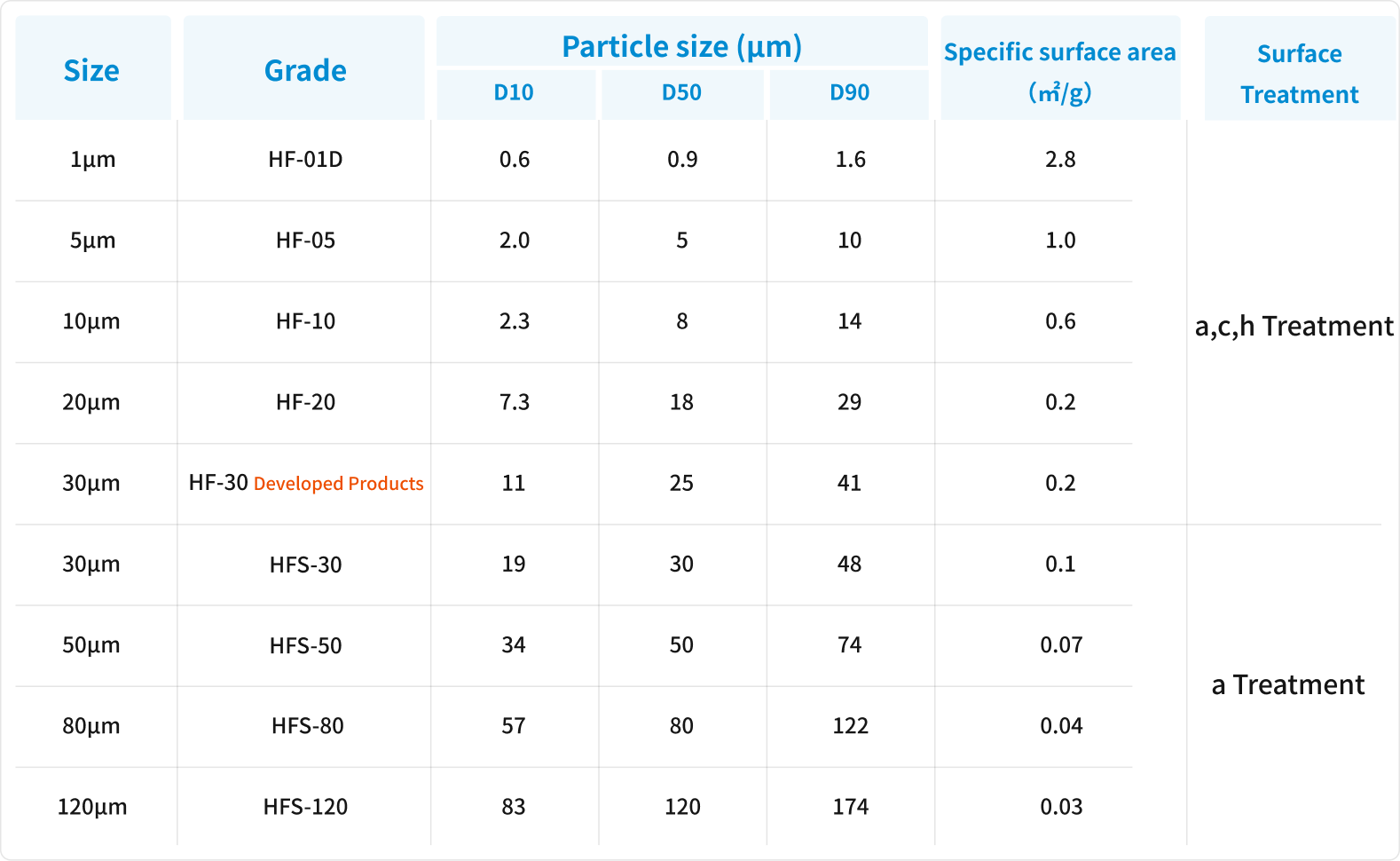
You can choose the type of particle size and surface treatment depending on the application, the type of resin, and the thickness of the resin.
a Treatment: For silicone resin system
c Treatment: For epoxy resin system
h Treatment: For epoxy and acrylic resin systems
The range of particle sizes ranges from 1 μm to 120 μm, and customization is possible such as surface treatment and top cut according to the resin.
Swipe left or right to view
It is possible to select the particle size according to the BLT. By combining multiple fillers with different particle sizes, it is possible to form a heat conduction path.
Swipe left or right to view